Beginner Guide
Home Perfumery: What It Is, What You Need, and How to Start
By Alaa Allam · Published
Home perfumery is the practice of creating your own fragrances from raw aromatic materials — essential oils, aromachemicals, absolutes, and resins — in a home or studio setting. It sits at the intersection of chemistry, craft, and sensory training, and it is considerably more accessible than most people expect.
You do not need a perfumery school or a professional laboratory. The same raw materials used by commercial perfumers are available to home perfumers in small quantities. With the right foundation — an understanding of fragrance structure, a small focused set of materials, and a disciplined approach to blending and evaluation — you can begin creating real fragrances from your first session.
This guide covers what home perfumery actually involves, what you need to set up your practice, how it compares to commercial perfumery, how much it costs, and what the learning path looks like. Use the links throughout to go deeper on any topic.
What Home Perfumery Actually Involves
At its core, home perfumery is about understanding and working with aromatic materials in a structured way. A home perfumer learns to identify individual ingredients by smell, understand how they behave in combination, and use the fragrance pyramid — the model that divides ingredients into top, heart, and base notes based on their volatility and role in a composition — to build balanced, evolving fragrances.
Unlike wearing or collecting perfume, home perfumery is a making practice. You are working with raw materials — sometimes natural, sometimes synthetic, often both — and learning to blend them into something coherent and intentional. It demands patience (maceration takes days or weeks), an educated nose (built through deliberate smelling practice), and systematic documentation (you cannot reproduce a formula you have not recorded).
The reward is a creative practice that very few people pursue seriously — and the ability to make fragrances that exist nowhere else.
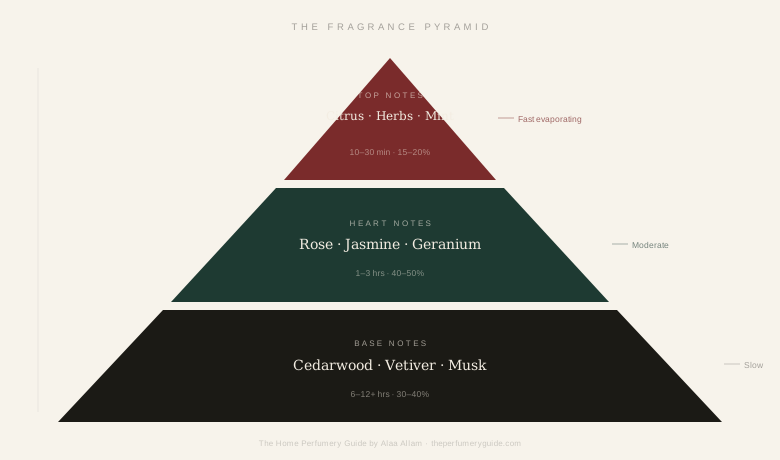
The Fragrance Pyramid: The Foundation of Home Perfumery
Every home perfumery composition is built on the fragrance pyramid — a model that divides aromatic materials into three tiers based on how quickly they evaporate from the skin and what role they play in the fragrance's evolution over time.
Top Notes
Top notes are the first impression — the bright, fast-evaporating opening of a fragrance. They last roughly 10 to 30 minutes on skin. Common home perfumery top note materials include bergamot, lemon, grapefruit, sweet orange, petitgrain, basil, and mint. Because they fade quickly, top notes create the immediate character of the fragrance but do not represent its lasting identity.
Heart Notes
Heart notes are the core of the composition. They emerge once the top notes begin to fade and typically last one to three hours. This is where the primary personality of the fragrance lives — florals, spices, green materials, fruity accords. Common heart materials in home perfumery include rose, jasmine, geranium, ylang-ylang, cardamom, black pepper, violet leaf, and iris root.
Base Notes
Base notes provide depth, longevity, and the lasting drydown of a fragrance. They are the slowest to evaporate — sometimes persisting six hours or more on skin. Base materials in home perfumery include woods (cedarwood, sandalwood, vetiver), resins (labdanum, benzoin, frankincense), musks, vanillic materials, and modern aromachemicals such as Ambroxan, Iso E Super, and Clearwood. A strong base is what makes a perfume feel full and lasting rather than thin and fleeting.
What You Need to Start Home Perfumery
A functional home perfumery setup is achievable for under $100. The table below covers everything you need to begin, with notes on each item.
| Item | Why You Need It | Est. Cost |
|---|---|---|
| Aromatic materials (10–15) | The building blocks of your formulas | $40–80 |
| Perfumers alcohol | Carrier and diluent for finished perfume | $15–25 |
| Glass vials (10–30 ml) | Test batches and formula storage | $8–15 |
| Droppers / pipettes | Precise drop-level measurement | $5–8 |
| Smelling strips | Evaluate materials without skin contact | $5–10 |
| Notebook | Document every formula you create | $0–5 |
Aromatic materials are the most important investment. Rather than buying a large unfocused collection, start with 10 to 15 materials that span all three tiers of the fragrance pyramid — a mix of naturals (essential oils, absolutes) and aromachemicals. A focused palette teaches you what each material actually contributes, which a large collection of 50 materials never will.
Perfumers alcohol is high-purity ethanol (190–200 proof) used to dilute your fragrance concentrate into a wearable spray. Avoid rubbing alcohol or isopropanol — they introduce unwanted odors and are not appropriate for home perfumery. Most online fragrance suppliers sell perfumers alcohol specifically formulated for this purpose.
For more detail on specific ingredient categories and a recommended beginner material palette, read our home perfumery ingredients guide.
How the Home Perfumery Process Works
Home perfumery follows a consistent process regardless of the specific fragrance you are making. Understanding the process before your first session will save you significant frustration later.
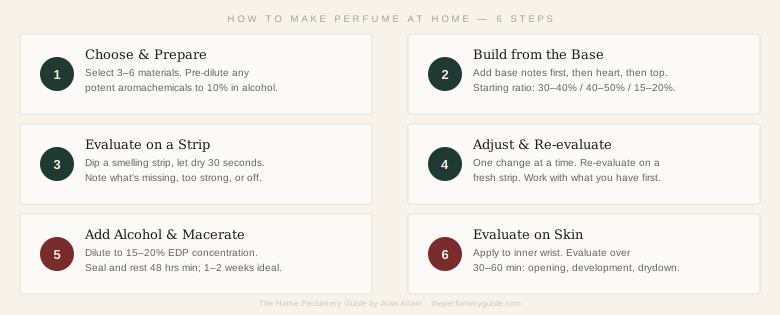
The core cycle is: choose your materials → build from the base up → evaluate on a strip → adjust and re-evaluate → add alcohol and macerate → evaluate on skin. Each step has specifics that matter:
- Pre-dilute potent materials before you begin. Concentrated aromachemicals used at full strength give a false impression of their actual character in a blend. Diluting to 10% in alcohol or DPG gives you finer control.
- Build from the base upward. Adding base notes first, then heart, then top lets you hear the composition evolve rather than being masked by the brighter top notes.
- Evaluate on paper, then skin. Smelling strips let you assess the accord without skin chemistry. Skin evaluation — done after macerating — reveals how your fragrance truly performs over time.
- Macerate before finalizing. A blend evaluated straight off the bench is not the same fragrance after one to two weeks. Patience here changes everything.
For the full step-by-step process with detail on each stage, read our guide to making perfume at home.
Home Perfumery vs. Commercial Perfumery
Home perfumery and commercial perfumery use the same raw materials. The differences are in scale, constraint, and creative freedom.
| Home Perfumery | Commercial Perfumery | |
|---|---|---|
| Scale | Small batches (10–100 ml) | Large production runs (thousands of units) |
| Materials | Same raw materials, small quantities | Bulk supply contracts, restricted palette |
| Creative brief | Your own aesthetic, no external constraint | Client briefs, market positioning |
| Regulatory | Mostly self-managed if for personal use | IFRA compliance, allergen labelling, EU regulation |
| Cost per formula | Very low (a few dollars per test batch) | High (formulation fees, trials, testing) |
| Creative freedom | Maximum — you answer to nobody | Limited by brief, brand, and production constraints |
| Bottling / packaging | Optional — many home perfumers keep formulas in vials | Packaging, labelling, and branding required |
The key advantage of home perfumery is creative freedom. Commercial perfumers work to client briefs and market requirements. Home perfumers work to their own aesthetic instincts — free to create unusual combinations, use uncommon materials, and develop formulas that exist nowhere else in the market. Many professional perfumers maintain a personal home practice precisely because it offers the creative latitude their commercial work does not.
How Long Does Home Perfumery Take to Learn?
The learning curve in home perfumery has two components: intellectual understanding and nose training. The intellectual side — understanding the fragrance pyramid, how to dilute materials, how to read and write a formula — can be absorbed relatively quickly, over weeks rather than months.
Nose training is slower. Learning to identify individual materials by smell, to recognize what is contributing what to a blend, and to evaluate a composition objectively rather than reactively — this takes deliberate practice over many sessions. Most home perfumers notice significant improvement in their olfactory discrimination after three to six months of regular smelling and blending.
A realistic timeline:
- First session: you can create a basic accord that smells intentional
- First month: you begin understanding what each material contributes
- Three months: you can identify most of your materials on a strip without labelling
- Six months: your blends have discernible structure, development, and longevity
- One to two years: you develop a genuine creative voice and formulaic instinct
There is no defined endpoint to home perfumery. It is a practice that deepens with time, materials knowledge, and accumulated nose memory. Many home perfumers work at it for years and still describe it as something they are learning.
Natural vs. Synthetic Materials in Home Perfumery
One of the first decisions home perfumers encounter is whether to work with natural materials, synthetic aromachemicals, or a combination of both. There is no correct answer — most serious home perfumers work with both, since each category offers capabilities the other does not.
Natural materials — essential oils, absolutes, CO₂ extracts, resins, and tinctures — are derived from plant, animal, or mineral sources. They tend to have complex, multi-faceted olfactory profiles (because they contain dozens of aromatic compounds rather than a single molecule), good emotional resonance for many people, and some variability between batches. Common home perfumery naturals include bergamot essential oil, rose absolute, vetiver essential oil, frankincense resin, and sandalwood essential oil.
Aromachemicals (synthetic aroma molecules) are single-compound ingredients that either replicate natural materials or create effects not found in nature. They are typically more consistent batch-to-batch, often cheaper per unit, and give home perfumers access to effects that do not exist in the natural palette — the clean musk of Habanolide, the woody amber of Ambroxan, the sheer cedarwood of Clearwood. Modern fine fragrance is built primarily on aromachemicals, with naturals adding complexity and character.
For a full breakdown of materials by type and tier, with a recommended beginner palette, read the perfume ingredients guide.
Where to Start Your Home Perfumery Practice
The most effective starting point for home perfumery is understanding fragrance structure before you blend anything. Knowing what top, heart, and base notes are — and why they evaporate at different rates — gives you a mental model for everything else that follows.
8 min read
Perfume Notes Explained
Start here. Understand the fragrance pyramid — how top, heart, and base notes work together over time and why the structure matters for home perfumery.
9 min read
Perfume Ingredients Guide for Beginners
Learn the two main categories of home perfumery materials — naturals and aromachemicals — and how to build your first focused ingredient palette.
10 min read
How to Make Perfume at Home
The full practical process: equipment, dilution, step-by-step blending, maceration, skin evaluation, and the most common beginner mistakes to avoid.
Want a complete home perfumery system?
The Home Perfumery Guide covers 52 material profiles with bench notes, 6 complete formula studies, and a full 64-term dictionary — a structured path from first principles to finished formula.
Get Instant Access · $9 →Home Perfumery FAQ
What is home perfumery?+
Home perfumery is the practice of creating your own fragrances using aromatic materials — essential oils, aromachemicals, absolutes, and resins — in a home or studio setting. Home perfumers work with the same building blocks as professional perfumers, on a smaller and more experimental scale.
Is home perfumery expensive to start?+
A functional home perfumery setup — equipment and a starter palette of 12 to 15 materials — typically costs between $60 and $120. Individual aromatic materials range from around $5 to $40 each. The ongoing cost is modest if you work with focused, small-batch formulas.
What is the difference between an essential oil and an aromachemical?+
Essential oils are complex natural extracts containing dozens of aromatic compounds — bergamot essential oil, for example, contains limonene, linalool, linalyl acetate, and many others. Aromachemicals are single isolated or synthesised aroma molecules — Ambroxan, for example, is a single compound that creates a warm amber-woody effect. Both are used extensively in home perfumery.
Can I sell perfume I make at home?+
Selling perfume made at home is possible but involves regulatory obligations depending on your market — IFRA compliance, allergen labelling, cosmetics safety assessment (in the EU), and product liability insurance. For personal use and gifting, home perfumers generally work without these requirements. Research the regulations in your country before selling.
How do I store home perfumery materials?+
Store aromatic materials in dark glass bottles, away from heat, light, and humidity. Citrus-based materials (bergamot, lemon, grapefruit) oxidise more quickly and should be refrigerated if you will not use them regularly. Most materials keep well for one to three years if stored correctly.
Ready to start your home perfumery practice?
Read the full three-guide curriculum — fragrance structure, ingredients, and the step-by-step making process — or explore the Home Perfumery Guide for a complete structured path.