Perfume Ingredients List: 50+ Essential Oils, Aromachemicals & Naturals
By Alaa Allam · Published · Updated
Understanding perfume ingredients is the foundation of everything in fragrance creation. Before you can blend, formulate, or even evaluate a perfume intelligently, you need to know what the raw materials are, how they behave, and what role they play inside a composition.
This guide provides a complete fragrance ingredients list for beginners — covering naturals and aromachemicals — organized by note position, with guidance on how to build a starter palette and the most common mistakes to avoid.
Fragrance Ingredients List: Quick Reference
The table below lists the most essential perfume and fragrance ingredients for beginners, organized by note position. Each entry includes the ingredient type and its core scent character.
| Ingredient | Type | Note | Scent Character |
|---|---|---|---|
| Bergamot | Natural — Essential Oil | Top | Fresh, floral citrus; refined and versatile |
| Lemon | Natural — Essential Oil | Top | Clean, bright, sharp; fades quickly |
| Sweet Orange | Natural — Essential Oil | Top | Warm, round citrus; pairs well with florals |
| Grapefruit | Natural — Essential Oil | Top | Zesty, slightly bitter; great in fresh blends |
| Petitgrain | Natural — Essential Oil | Top | Woody-green citrus; more lasting than typical citrus |
| Lavender | Natural — Essential Oil | Top / Heart | Aromatic, floral, herbal; extremely beginner-friendly |
| Lime | Natural — Essential Oil | Top | Sharp, tart, green citrus; brighter and more bitter than lemon |
| Mandarin | Natural — Essential Oil | Top | Sweet, soft citrus; rounder and less sharp than orange |
| Neroli | Natural — Essential Oil | Top / Heart | Fresh floral-citrus from bitter orange blossom; classic cologne note |
| Clary Sage | Natural — Essential Oil | Top / Heart | Herbal, slightly musky-sweet; softens citrus openings |
| Basil | Natural — Essential Oil | Top | Green, anisic, peppery; adds herbal lift |
| Galbanum | Natural — Resin | Top | Sharp, green, bitter; iconic in chypre and green florals |
| Pink Pepper | Natural — Essential Oil | Top | Dry, fruity-spicy; modern staple in fresh compositions |
| Aldehyde C-12 (MNA) | Aromachemical | Top | Waxy, soapy, metallic sparkle; defines the classic aldehydic opening |
| Violet Leaf Absolute | Natural — Absolute | Top / Heart | Cucumber-green, cool, slightly metallic |
| Rose Absolute | Natural — Absolute | Heart | Rich, warm, deep floral; full and complex |
| Jasmine Absolute | Natural — Absolute | Heart | Warm, indolic, complex; works across many styles |
| Geranium | Natural — Essential Oil | Heart | Rosy-green, versatile; bridges florals and fresh |
| Ylang-Ylang | Natural — Essential Oil | Heart | Intensely floral, sweet; use sparingly |
| Cardamom | Natural — Essential Oil | Heart | Warm, spicy, slightly eucalyptic |
| Black Pepper CO₂ | Natural — CO₂ Extract | Heart | Dry, sharp, diffusive; adds spice without sweetness |
| Iris (Orris) Butter | Natural — Butter | Heart | Powdery, cool, root-like violet; extremely refined and costly |
| Tuberose Absolute | Natural — Absolute | Heart | Creamy, heady white floral with a rubbery-green edge |
| Orange Blossom Absolute | Natural — Absolute | Heart | Sweet, honeyed white floral; softer than neroli |
| Alpha-Ionone | Aromachemical | Heart | Powdery, sweet violet-candy character |
| Hydroxycitronellal | Aromachemical | Heart | Sweet, green lily-of-the-valley; classic muguet building block |
| Linalool | Natural / Aromachemical | Top / Heart | Clean, floral-woody; the backbone of lavender and many fresh accords |
| Rose Oxide | Aromachemical | Heart | Green, metallic rose facet; sharpens rose accords |
| Cinnamon Leaf | Natural — Essential Oil | Heart | Warm, spicy, slightly medicinal; strong in small doses |
| Clove Bud | Natural — Essential Oil | Heart | Warm, spicy-medicinal; a little goes a long way |
| Nutmeg | Natural — Essential Oil | Top / Heart | Warm, woody-spicy with a slight camphor edge |
| Cedarwood | Natural — Essential Oil | Base | Dry, woody, clean; most beginner-friendly base |
| Sandalwood | Natural — Essential Oil | Base | Creamy, milky, smooth; naturals and synthetics both work |
| Vetiver | Natural — Essential Oil | Base | Earthy, smoky, complex; use in small amounts |
| Patchouli | Natural — Essential Oil | Base | Dark, earthy, sweet-musty; defining oriental base |
| Benzoin Resinoid | Natural — Resin | Base | Sweet, warm, vanilla-like; easy natural fixative |
| Labdanum Absolute | Natural — Absolute | Base | Warm, animalic, resinous; excellent in ambers |
| Vanilla / Ethyl Vanillin | Natural / Aromachemical | Base | Sweet, warm, crowd-pleasing; reliable base anchor |
| Ambroxan | Aromachemical | Base | Woody, ambergris, skin-close; exceptional longevity |
| Iso E Super | Aromachemical | Base | Woody, cedar-like, transparent; diffusive extender |
| Hedione | Aromachemical | Heart | Radiant, jasmine-like, luminous; adds lift to florals |
| Galaxolide | Aromachemical — Musk | Base | Soft, clean, musky; adds skin-scent longevity |
| Amyris | Natural — Essential Oil | Base | Soft, creamy wood; affordable sandalwood substitute |
| Guaiac Wood | Natural — Essential Oil | Base | Smoky, tea-like, faintly rosy wood note |
| Oud (Agarwood) | Natural — Essential Oil / Resin | Base | Deep, animalic, smoky-sweet; rare and intensely long-lasting |
| Frankincense (Olibanum) | Natural — Resin | Base | Resinous, citrusy-smoky, slightly peppery |
| Myrrh | Natural — Resin | Base | Warm, bitter-sweet, medicinal resin |
| Opoponax (Sweet Myrrh) | Natural — Resin | Base | Sweet, balsamic, faintly root-like resin |
| Tonka Bean Absolute | Natural — Absolute | Base | Warm, hay-like, almond-vanilla sweetness |
| Coumarin | Aromachemical | Base | Sweet, hay-like, tonka-adjacent; classic fougère base note |
| Ethyl Maltol | Aromachemical | Base | Sweet, cotton-candy, caramelized-sugar note |
| Cashmeran | Aromachemical | Base | Soft, musky-woody with a spiced, velvety texture |
| Norlimbanol | Aromachemical | Base | Dry, intensely woody-ambery; used sparingly for depth |
| Cetalox | Aromachemical | Base | Clean ambergris-woody note; smoother and more diffusive than Ambroxan |
| Helvetolide | Aromachemical — Musk | Base | Soft, fruity-musky; modern skin-scent musk |
| Habanolide | Aromachemical — Musk | Base | Clean, soft musk with a slightly fruity top |
| Exaltolide (Musk T) | Aromachemical — Musk | Base | Powdery, soft musk; classic macrocyclic musk character |
| Cocoa Absolute | Natural — Absolute | Base | Rich, chocolatey-earthy gourmand note |
What Are Perfume Ingredients?
Perfume ingredients — also called fragrance ingredients — are the aromatic raw materials used to construct a fragrance. They range from essential oils extracted from flowers, peels, and woods, to highly purified synthetic aroma molecules that exist nowhere in nature. Most modern perfumes — whether artisan or commercial — use a combination of both. Understanding the difference between them, and knowing when to use each, is one of the most important skills a beginner can develop.
Natural Fragrance Ingredients vs Aromachemicals
Natural Fragrance Ingredients
Natural perfume ingredients are derived from plant, animal, or mineral sources. They include:
- Essential oils — aromatic extracts obtained through steam distillation or cold pressing. Examples include bergamot, lavender, cedarwood, clary sage, and vetiver.
- Absolutes — concentrated aromatic extracts obtained through solvent extraction, typically used for delicate florals that cannot withstand the heat of distillation. Rose absolute, jasmine absolute, and tuberose absolute are classic examples.
- Resins and balsams — thick aromatic substances from tree saps or roots, such as labdanum, benzoin, frankincense (olibanum), and myrrh. These tend to be warm, dark, and long-lasting.
- CO₂ extracts — a modern extraction method using supercritical carbon dioxide, which produces highly accurate representations of the source material. CO₂ extracts of ginger, black pepper, and chamomile are popular with artisan perfumers.
Natural ingredients bring complexity and organic richness to a blend. They often contain dozens of constituent molecules, which gives them a multi-faceted, evolving character. However, they can also be variable in quality, batch-dependent, and more expensive than their synthetic equivalents.
Aromachemicals (Synthetic Fragrance Materials)
Aromachemicals are isolated or synthesised aroma molecules. They are the foundation of modern perfumery and are used in virtually every commercial fragrance in existence. Common aromachemicals include:
- Ambroxan — a powerful, skin-close woody-ambergris molecule with excellent longevity. Used in small percentages to add depth and projection.
- Iso E Super — a woody, cedar-like aromachemical with a transparent, diffusive quality. Works well as a base note extender or supporting structure material.
- Hedione — a soft, radiant jasmine-like molecule that adds luminosity and lift to floral and fresh compositions.
- Ethyl linalool / Linalool — a clean, smooth floral-woody aroma used widely in lavender-type accords and fresh compositions.
- Galaxolide, Habanolide, Exaltolide — examples of musk aromachemicals that add soft, skin-scent-like longevity to a base.
Aromachemicals offer consistency, cost efficiency, and the ability to create effects that simply do not exist in nature. They are not inferior to naturals — they are different tools that serve different purposes. Many of the most celebrated perfumes in the world are built primarily around aromachemicals. All materials used in finished fragrances are subject to safety guidelines set by the International Fragrance Association (IFRA), which publishes usage limits for individual ingredients based on independent safety assessments.
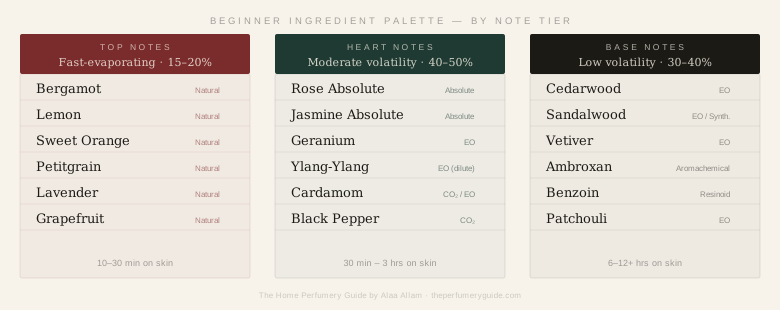
Top Note Ingredients
Top notes are bright, light, and fast-evaporating. They create the opening impression of a fragrance and fade within 10 to 30 minutes of application. They are often the first thing someone smells on a smelling strip — but they are not the most representative part of a finished perfume.
Common top note ingredients for beginners:
- Bergamot — a fresh, slightly floral citrus with a refined quality. One of the most versatile top notes in perfumery.
- Lemon — clean, bright, and sharp. Adds immediate freshness but fades quickly without support from heart notes.
- Sweet orange — warmer and rounder than lemon. Pairs well with floral hearts.
- Grapefruit — zesty and slightly bitter. A popular choice in fresh and aquatic compositions.
- Petitgrain — woody-green citrus from the leaves of the bitter orange tree. More lasting than typical citrus top notes.
- Lavender — technically bridges top and heart, but often functions as an opening aromatic. Extremely beginner-friendly.
Heart Note Ingredients
Heart notes form the identity of the fragrance. Once the top notes fade, the heart takes centre stage and defines what kind of perfume it is — floral, spicy, fruity, green, or aromatic. Heart notes typically last one to three hours.
Common heart note ingredients for beginners:
- Rose absolute or essential oil — the quintessential floral heart. Rich, warm, and deep when used as an absolute; fresher and more transparent as an essential oil.
- Jasmine absolute — warm, indolic, and complex. A classic heart note ingredient that works in almost every floral or oriental direction.
- Geranium — a versatile rosy-green material that bridges florals, fougères, and fresh compositions. Excellent for beginners.
- Ylang-ylang — intensely floral and slightly sweet. Use sparingly — it is powerful at full strength.
- Cardamom — warm, spicy, and slightly eucalyptic. A modern staple in spicy and oriental fragrances.
- Black pepper CO₂ — dry, sharp, and diffusive. Adds complexity and spice without sweetness.
Base Note Ingredients
Base notes provide the foundation, depth, and longevity of a fragrance. They are the slowest to evaporate and the last thing you smell as a perfume dries down on skin — sometimes hours after initial application. A strong base is what separates a fragrance that lasts from one that disappears within the hour.
Common base note ingredients for beginners:
- Cedarwood (Atlas or Virginian) — dry, woody, and easy to work with. One of the most beginner-friendly base materials available.
- Sandalwood — creamy, milky, and smooth. Both natural sandalwood (Mysore, Australian) and synthetic equivalents like Javanol or Sandalore work well.
- Vetiver — earthy, smoky, and complex. Best used in small amounts until you understand its character.
- Patchouli — dark, earthy, and sweet-musty. A defining base note in oriental and chypre structures.
- Labdanum absolute — warm, animalic, and resinous. Excellent in oriental and amber compositions.
- Benzoin resinoid — sweet, warm, and vanilla-like. Blends easily and acts as a natural fixative.
- Vanilla (absolute or Ethyl Vanillin) — sweet, warm, and crowd-pleasing. A reliable base anchor for many fragrance styles.
- Ambroxan — one of the most useful aromachemicals a beginner can learn. Adds projection and a warm, skin-close woody-ambergris quality at very low percentages.
How to Build a Beginner Perfume Ingredient Palette
One of the most common beginner mistakes is buying too many materials before understanding any of them. A better approach is to start with a focused set of 12 to 15 materials and spend real time learning each one — smelling it on a strip, observing how it behaves in a simple two or three material blend, and understanding its character at different dilutions.
A practical starter palette might include:
- 2–3 top notes: bergamot, petitgrain, lavender
- 2–3 heart notes: rose absolute, geranium, cardamom
- 3–4 base notes: cedarwood, benzoin, vanilla/Ethyl Vanillin, Ambroxan
- 1–2 bridge materials: Iso E Super or Hedione (these work across multiple tiers)
With just this set, you can create a wide range of fragrance compositions — from fresh florals to warm orientals to spicy woody accords. Mastering a small palette builds the sensory memory and formulation intuition that makes adding new materials meaningful later on.
Starting on a Budget: Garden and Household Ingredients
You do not need a full aromachemical palette to begin. If you are working with what you already have at home or in the garden, several accessible materials can produce genuinely pleasant, simple blends while you decide whether to invest further.
- Fresh or dried rose petals, lavender, or jasmine — if you grow them, a simple enfleurage or alcohol infusion (petals steeped in vodka or perfumers alcohol for 1–2 weeks, strained and repeated with fresh petals for a stronger scent) captures a soft, true-to-life floral note.
- Citrus peels — the zest of lemon, orange, or grapefruit, dried slightly and infused in alcohol for a few days, gives a bright, natural top note reminiscent of the whole fruit.
- Whole spices — cinnamon bark, cloves, or vanilla beans infused in alcohol add warmth and depth as a base-note substitute. Use sparingly and patch test, as some spice materials are known skin sensitizers (see safety guidance in our how-to-make-perfume guide).
- Fractionated coconut oil or a neutral carrier oil — a low-cost stand-in for perfumers alcohol when you are experimenting with oil-based (rather than alcohol-based) perfume.
These household and garden methods will not match the precision or longevity of formulated aromachemicals and professionally extracted absolutes, and results vary by growing conditions and steeping time — but they are a genuinely free way to learn how infusion, layering, and dilution affect a scent before committing to a supplier order.
Sourcing Ingredients for Your Home Perfumery Practice
For a full overview of what building a home perfumery practice involves — beyond just ingredients — see our complete guide to getting started.
Reputable suppliers for home perfumers include fragrance-specific vendors who sell materials at small quantities suitable for hobbyists and beginners. When choosing a supplier, look for ones that provide GC/MS reports (chemical analysis), clear labelling of concentration and origin, and material safety data sheets (MSDS) for aromachemicals.
Avoid buying fragrance materials from general marketplace platforms without quality documentation — adulterated or mislabelled materials are common and will undermine your learning.
Two reference resources worth bookmarking as you build your palette: The Good Scents Company is a comprehensive industry database covering scent profiles, uses, and supplier information for thousands of aromatic materials. The IFRA Standards database lists usage limits for individual fragrance ingredients by product category — essential reading before formulating anything intended for skin application.
Perfume Composition: How Ingredients Fit Together
Perfume composition refers to two related things: how ingredients are structurally arranged within a fragrance, and what concentration of aromatic material the finished product contains.
The structural side is the fragrance pyramid — the layering of top, heart, and base notes described above. A well-composed perfume transitions smoothly across these tiers: the top notes create an appealing opening, the heart notes carry the main identity, and the base notes anchor the scent and extend its longevity. Most compositions use a ratio of roughly 20–30% top notes, 40–50% heart notes, and 25–40% base notes by weight — though these ratios shift considerably by style and intent.
The concentration side determines how long the fragrance lasts and how strong it projects:
- Parfum / Extrait de Parfum — 20–40% aromatic concentrate in alcohol. The most intense and longest-lasting form. Base notes dominate; the composition evolves slowly on skin.
- Eau de Parfum (EDP) — 15–20% aromatic concentrate. The most common fine-fragrance format. Good balance of projection, longevity, and top note presence.
- Eau de Toilette (EDT) — 8–15% concentrate. Lighter, fresher, with a more prominent opening that fades faster. Well-suited to citrus and aromatic compositions.
- Eau de Cologne (EDC) — 2–4% concentrate. The lightest format, built around fresh citrus and herbal top notes. See the section below for cologne-specific ingredients.
For home perfumers, working at EDT strength (around 10–12% in fine perfumer's alcohol) is a practical starting point. It lets you evaluate the composition clearly without the distortion of very high concentrations, and it is close to a real-world wearable result.
Ingredients of Cologne: What Makes an Eau de Cologne?
The ingredients of cologne are technically the same aromatic materials used in all perfumery — essential oils, absolutes, and aromachemicals — but the selection and ratios are different. Classical Eau de Cologne is built around a fresh, citrus-led accord with a light aromatic heart and minimal base.
The original Cologne accord — derived from the historic Eau de Cologne style developed in 18th-century Cologne, Germany — uses these core ingredients:
- Bergamot — the signature citrus; refined and slightly floral
- Lemon — clean brightness and immediate freshness
- Sweet orange or blood orange — warmth and roundness
- Neroli — floral-citrus heart note from bitter orange blossoms; a defining Cologne ingredient
- Petitgrain — woody-green citrus that bridges top and heart and lasts longer than typical citrus
- Lavender or rosemary — aromatic herbal heart notes that add structure
- Cedarwood or oakmoss — a light woody or mossy base that prevents the composition from feeling flat
At 2–4% concentration, cologne ingredients need to be chosen primarily for diffusion and brightness rather than depth or longevity. High-volatility materials shine in this format; heavy base note ingredients like patchouli or vetiver are used sparingly if at all, and aromachemicals like Ambroxan are less commonly featured than in EDP or parfum formats.
Modern interpretations of cologne stretch the format considerably — many contemporary EDCs use the same ingredients as an EDP but at lower concentration, rather than following the classical citrus-aromatic structure.
Mistakes Beginners Make When Choosing Ingredients
- Buying based on smell alone. A material that smells pleasant on its own may not behave well inside a blend. Learn structural function alongside scent character.
- Ignoring dilution ratios. Potent materials like clove bud, cinnamon, and Iso E Super must be pre-diluted before use. Working with them neat will skew your evaluations.
- Skipping aromachemicals entirely. Some beginners prefer to work only with naturals, but this limits your range significantly. Aromachemicals are not a compromise — they are tools.
- Buying expensive materials too early. There is little value in working with premium Mysore sandalwood or Rosa centifolia absolute before you understand basic blending. Learn the technique with affordable materials first.
Frequently Asked Questions About Perfume Ingredients
What are the ingredients of a perfume?
The ingredients of a perfume fall into two categories: natural fragrance ingredients — essential oils, absolutes, resins, and CO₂ extracts derived from plants — and synthetic aromachemicals — isolated or lab-synthesised aroma molecules. Most perfumes use both. They are organised by evaporation rate into top notes (the opening), heart notes (the identity), and base notes (the foundation and longevity). See the full list and table above for the most useful beginner ingredients.
What are the ingredients of cologne?
Cologne (Eau de Cologne) uses the same aromatic ingredients as perfume, but at a lower concentration of roughly 2–4% in alcohol. Classic cologne ingredients emphasise fresh citrus top notes — bergamot, lemon, orange, neroli — supported by light heart notes like lavender, petitgrain, and rosemary, and a minimal base of cedarwood or oakmoss. The lighter concentration makes cologne fresher but less persistent. See the full cologne ingredients section above.
What is a perfume ingredients list used for?
A perfume ingredients list gives you a curated starting point: which aromatic materials to buy, how they are categorised, and what role each plays in a composition. Beginners use it to build a focused starter palette rather than buying materials at random. The table at the top of this guide is designed to function as exactly that — a practical, organised reference for getting started.
What is the difference between natural and synthetic perfume ingredients?
Natural perfume ingredients are extracted from plant or animal sources — essential oils, absolutes, resins. Synthetic ingredients are lab-created aroma molecules such as Ambroxan, Hedione, and Iso E Super. Neither is superior: naturals offer complexity and organic richness; synthetics provide consistency, cost-efficiency, and effects impossible to achieve naturally. Most professional and artisan perfumes use both.
What is perfume composition?
Perfume composition refers to the structural arrangement of ingredients across the fragrance pyramid (top, heart, and base notes) and the concentration of aromatic material in the product (parfum, EDP, EDT, or cologne). A well-composed fragrance balances these tiers so the transition from opening to drydown is smooth and coherent. Concentration determines longevity and strength — parfum at 20–40% lasts the longest, while cologne at 2–4% is the lightest.
Want to go further?
The Home Perfumery Guide covers 52 material profiles in depth — plus 6 formula studies, calculation lessons, and a 64-term dictionary, all in one structured PDF.
Get Instant Access · $9 →Ready to Start Blending?
Once you have assembled your starter palette, the next step is understanding how to put it all together. Read our step-by-step guide to creating perfume at home for a practical walkthrough of the blending process, from your first drops to a finished, macerating formula.
It also helps to understand how ingredients interact across the fragrance timeline — our guide to perfume notes explained covers how top, heart, and base notes relate to evaporation and structure in more detail.
Want a Complete Ingredient System?
If you want a more structured path to learning perfume ingredients, formula thinking, and weighed formulas, the Home Perfumery Guide covers 52 material profiles in depth, including 6 formula studies built from real formulation principles — and a 64-term dictionary to support your learning at every stage.